Digital Humanities Projects
Experiential Learning & Service‑Learning Initiatives
Dr. Teresa Russo develops innovative Digital Humanities projects that integrate experiential learning and service‑learning into university classrooms. Working with students across literature, material culture, semiotics, museum studies as well as heritage studies and topics of diaspora, she guides learners in creating digital resources that translate humanistic research into accessible, public‑facing tools. These projects combine scholarly rigor with community engagement, offering educators, curators, and students new ways to explore storytelling, art, geography, and cultural history.
Each project below is open access and designed for use in secondary and post‑secondary classrooms, museums, and cultural institutions. They support interdisciplinary teaching in Art History, Medieval and Early Modern Studies, Spanish Language and Literature, Geography, Ethnographic Studies,, and Digital Humanities. Through mapping, visualization, and interpretive design, students learn to communicate complex ideas to diverse audiences while contributing meaningful digital resources to the broader educational community.
These projects reflect Dr. Russo’s commitment to public humanities, collaborative learning, and the creation of digital tools that enrich teaching, research, and museum practice. As the initiatives grow each year, new student contributions continue to expand the collection and strengthen its value for educators and curators.
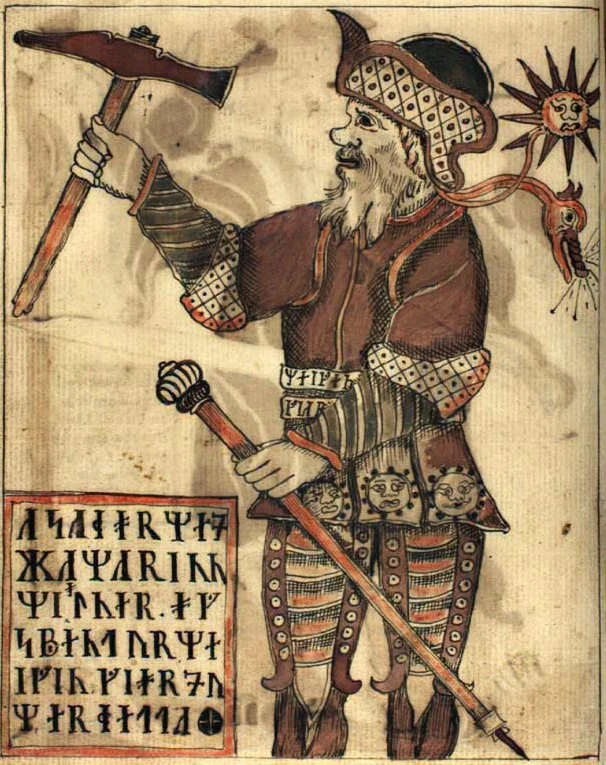
Teaching the Middle Ages: Digital Humanities Projects
Teaching the Middle Ages (TMA) is a digital humanities initiative created by Dr. Teresa Russo in 2016 to provide open‑access teaching resources for educators, curators, and lifelong learners. Through experiential learning and service‑learning projects, Dr. Russo works with university students to develop digital tools that make medieval literature, culture, and storytelling accessible to elementary, high school, and university audiences. These projects transform humanistic research into interactive, public‑facing materials that support interdisciplinary teaching across Art History, Medieval Studies, Literature, Geography, and Museum Education.
Students contribute to TMA by designing StoryMaps, creating novel‑study packets, producing museum‑spotlight materials, and developing classroom‑ready visuals grounded in semiotics, narratology, and cultural analysis. Many of these projects have received recognition, including CEWIL Canada and EWO WIL Ontario awards. Notably, the novel‑study guide to Thor earned national recognition from the Government of Canada, reflecting the mpact of the teaching materials on both academic and community partners.
All digital humanities projects on this site are open access and freely available for educators, curators, and institutions seeking high‑quality materials to teach the Middle Ages and its legacy. As the initiative grows each year, new student‑created resources continue to expand the collection, strengthening TMA’s mission to connect medieval studies with contemporary classrooms and cultural spaces.

Creative Responses to Medieval Literature
Teaching the Middle Ages showcases student projects that offer imaginative, personal responses to medieval texts. In Dr. Teresa Russo’s courses, students may choose a creative assignment in place of a traditional essay—producing artwork in any medium or crafting original writing such as poems, plays, short stories, or graphic‑novel excerpts inspired by the literature studied in class. These works reflect how medieval narratives continue to resonate today, inviting students to explore themes of heroism, warrior culture, courtly love, and chivalric ideals through their own artistic and interpretive lenses.
Students engage with a wide range of texts, from Old English poetry and Anglo‑Saxon riddles to Norse sagas, Marie de France’s Lais, Dante’s Inferno, Boccaccio’s Teseida, Chaucer’s Knight’s Tale, and Arthurian legends. Each creative piece is accompanied by a reflective commentary in which students discuss their process, inspiration, and the connections between their work and the medieval stories they studied.
This assignment was inspired by Dr. Chris Koenig‑Woodyard’s “postcard poem” project at the University of Toronto Mississauga, where students paired creative writing with critical analysis. Dr. Russo introduced her version of the assignment at Brock University in 2021 and later expanded it to her Dante course at Florida Atlantic University in 2025, where students produced exceptional and deeply thoughtful work.
The projects shared here represent the creativity, insight, and engagement of students who bring medieval literature to life through art and storytelling.
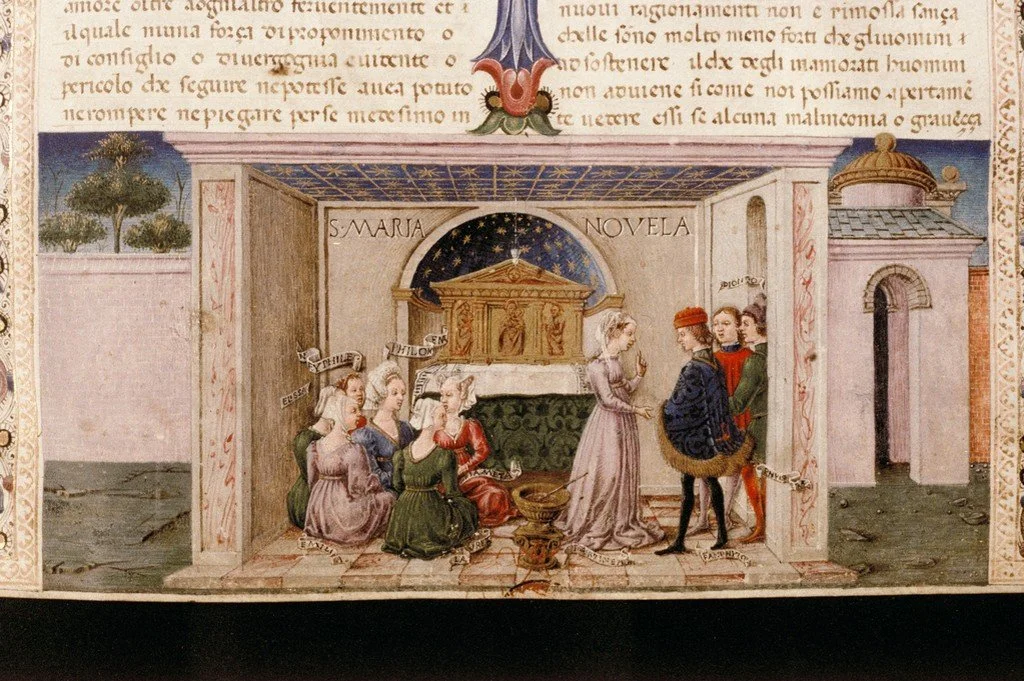
Giovanni Boccaccio’s One Hundred Tales: The Decameron StoryMap
An Experiential Learning Project at Victoria University, University of Toronto
Students at Victoria University in the University of Toronto in Dr. Russo’s course, Material Culture and Semiotics Program (MCS), participated in an innovative experiential learning project that brings Giovanni Boccaccio’s Decameron into the digital age. Using methods of semiotics to analyze storytelling—signs and meaning, narratology, and intertextuality—students built a new interactive StoryMap that reimagines Boccaccio’s one hundred tales for contemporary learners.
The StoryMap was designed by Dr. Teresa Russo and is powered by the University of Toronto’s Map and Data Library with the support of Gerald Romme, GIS Analyst. Students from the Material Culture and Semiotics Program (MCS) received an EWO WIL Student of the Year Award for their contributions and extend their gratitude to teachers and industry partners across Ontario’s York and Niagara Regions, especially Dr. Gianluca Agostinelli of the Niagara Catholic District School Board.
The project also benefited from contributions by Bernardina Liliana Di Pietro of Holy Cross Catholic Academy (YCDSB‑IB), the 2022 Student Volunteer from our Industry Partners; support from CEWIL; editorial work by Rion Levy of Victoria College (2023); and research assistance from Ruilin Zhang of Brock University (2023).
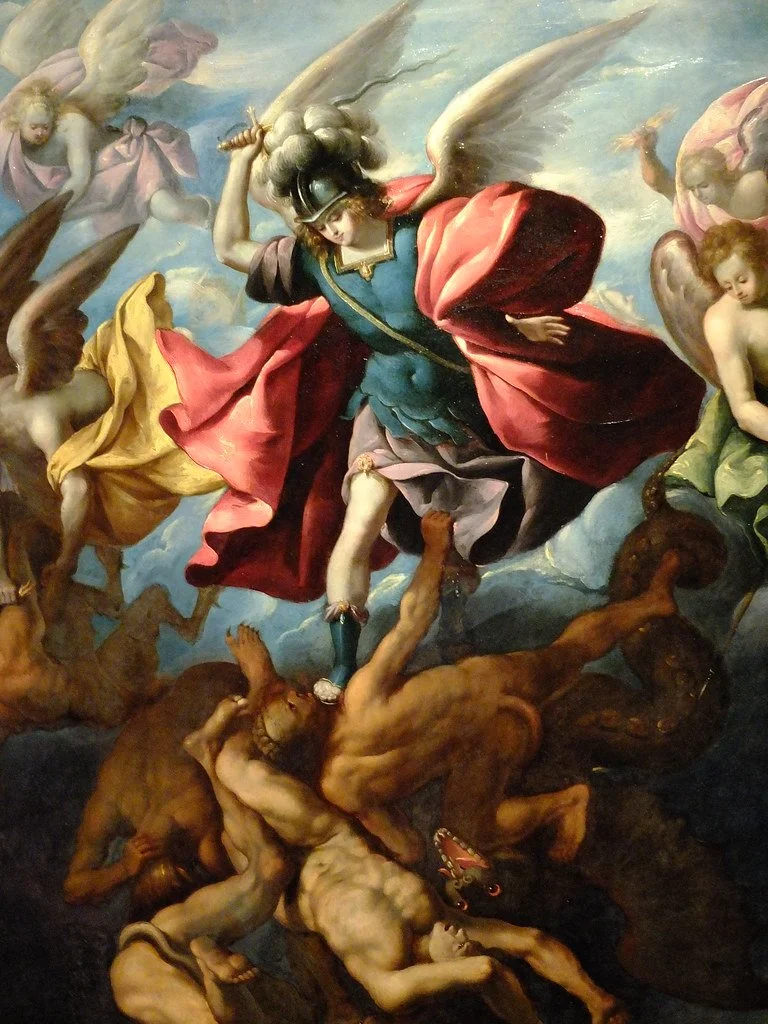
Golden Age of Spain and the Rise of a European Empire
A Timeline for Splendor and Passion Exhibition at the Boca Raton Museum of Art
To support Splendor and Passion: Baroque Spain and Its Empire exhibition at the Boca Raton Museum of Art in 2024-2025 saeson, Dr. Teresa Russo created a custom ArcGIS StoryMap designed to accompany the exhibition and for high school teachers teaching Art History, Spanish Language and Literature, Medieval Studies, and interdisciplinary humanities courses. This digital resource extends the exhibition’s educational reach by offering students an interactive way to explore the cultural world that shaped Spain’s Golden Age.
The StoryMap introduces key themes of the Renaissance and Baroque periods through visual timelines, geographic context, and curated images. It highlights major artists featured in the exhibition—including El Greco, Murillo, Velázquez, and Zurbarán—while situating their masterworks located at The Hispanic Society of America within the broader history of Spain’s empire. Teachers can use the StoryMap to guide students through the development of artistic style, the rise of global exchange, and the literary and cultural changes that culminated in Spain during this time.
Splendor and Passion: Baroque Spain and Its Empire at the Boca Raton Museum of Art was organized by The Hispanic Society of America with support from The Museum Box. The exhibition was supported by an indemnity from the Federal Council on the Arts and the Humanities, and educational programming was generously funded by the Gerald and Olivia Shapiro Family Foundation.
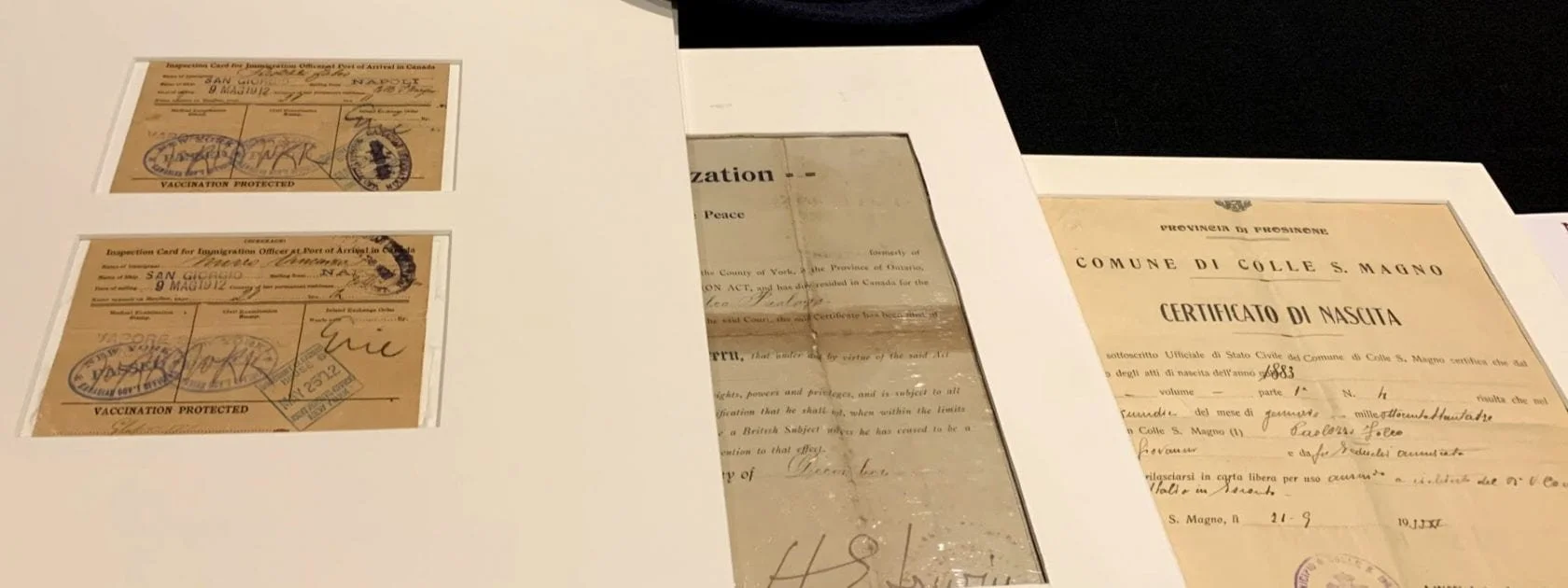
Archival Research of Italian-Canadian Immigration and Culture (ARICIC)
ARICIC is a digital heritage initiative founded by Dr. Teresa Russo in September 2019 as the first student‑driven project to examine heritage, traditions, customs, diaspora, and discrimination within an ethnic community through archival research. Developed as an experiential learning and service‑learning model, ARICIC engages undergraduate students from University College at the University of Toronto and Brock University in biannual research projects that explore the history and cultural identity of Italian Canadians.
Students investigate national, provincial, and municipal archives to study Italian immigration, community traditions, cultural contributions, and the lived experiences of Italian Canadians across generations. Their work includes examining historical documents, analyzing patterns of migration, and researching episodes of discrimination such as the internment of Italian Canadians during World War II and early workplace discrimination faced by Italian immigrants. Each term culminates in an undergraduate conference presentation, where students share their findings with academic and community audiences.
A selection of student academic posters—published with permission—appears on this site as part of the growing collection of Italian‑Canadian narratives. The inaugural publication coincided with the Ninth Annual ICAP Conference at Brock University, marking ARICIC’s emergence as a significant digital humanities project preserving and interpreting Italian‑Canadian heritage.
ARICIC continues to expand each year, offering educators, researchers, and community members open‑access resources that document the diverse stories, histories, and cultural legacies of Italian communities in Canada.
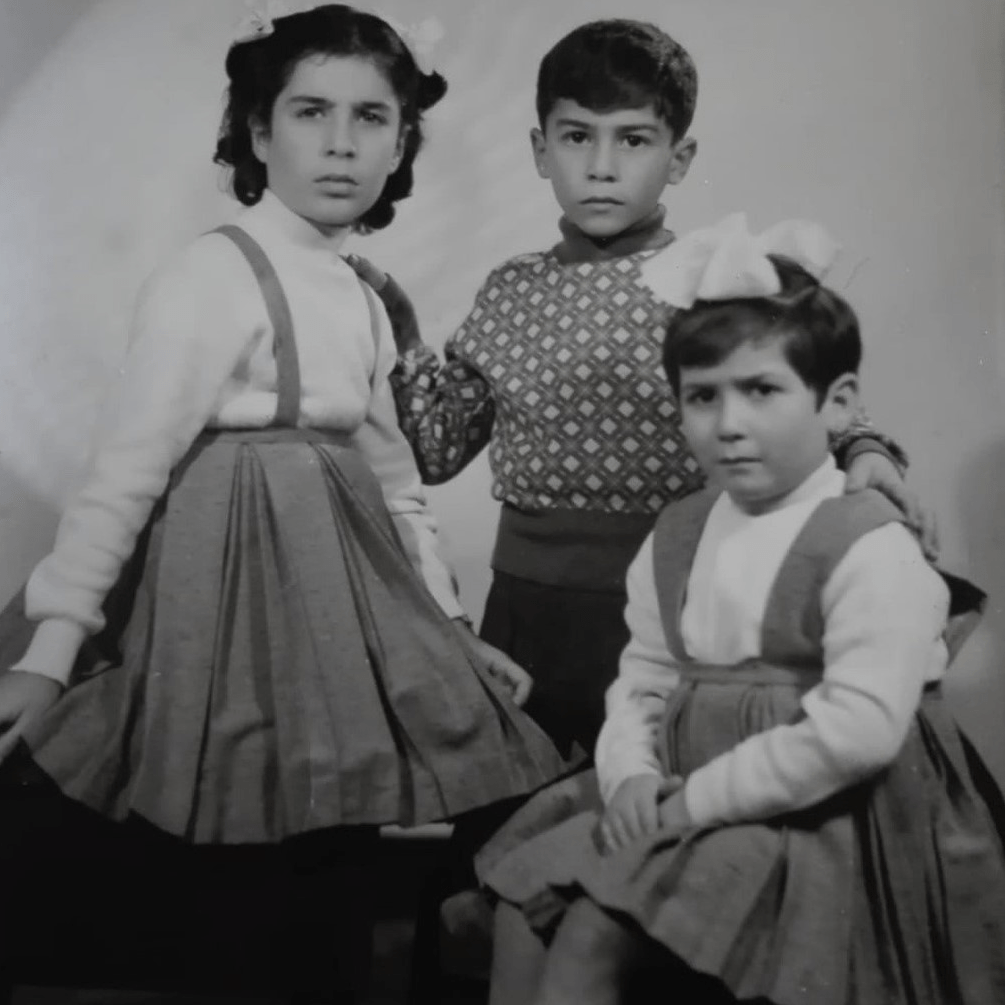
Italian Communities in Canada: Heritage, Cultural, and Ethnographic Studies
Italian Communities in Canada: Heritage, Cultural, and Ethnographic Studies is an experiential learning initiative created by Dr. Teresa Russo for undergraduate students in HUMA3800/ITAL3800: Italian Heritage and Digital Applications at the University of Guelph. This digital humanities project invites students to study Italian communities across Canada through ethnographic interviewing, cultural analysis, and the examination of tangible and intangible heritage.
Students conduct interviews, gather historical and cultural data, and analyze themes such as immigration, community identity, Giuliano-Dalmata Community, Italian Enclaves, and the internment of Italian Canadians during World War II. Their work combines scholarly research with digital storytelling, producing oral histories, private collections and photo galleries, academic posters, videos, and ArcGIS StoryMaps that document the lived experiences of Italian Canadians.
The project began in September 2021 with the first interviews and StoryMaps created by Lauren Prezio, Antonio Spadafora, Kristie Braley, and Dana Berthiaume under Dr. Russo’s supervision. Since its inaugural year, the site has expanded significantly, now featuring numerous oral histories, narratives of legendary figures and events in Canadian history, and a growing archive of student‑generated digital heritage materials.
All resources are open access, offering educators, curators, researchers, and community members a rich digital repository that preserves and celebrates Italian Canadian heritage while providing students with meaningful experiential learning opportunities.